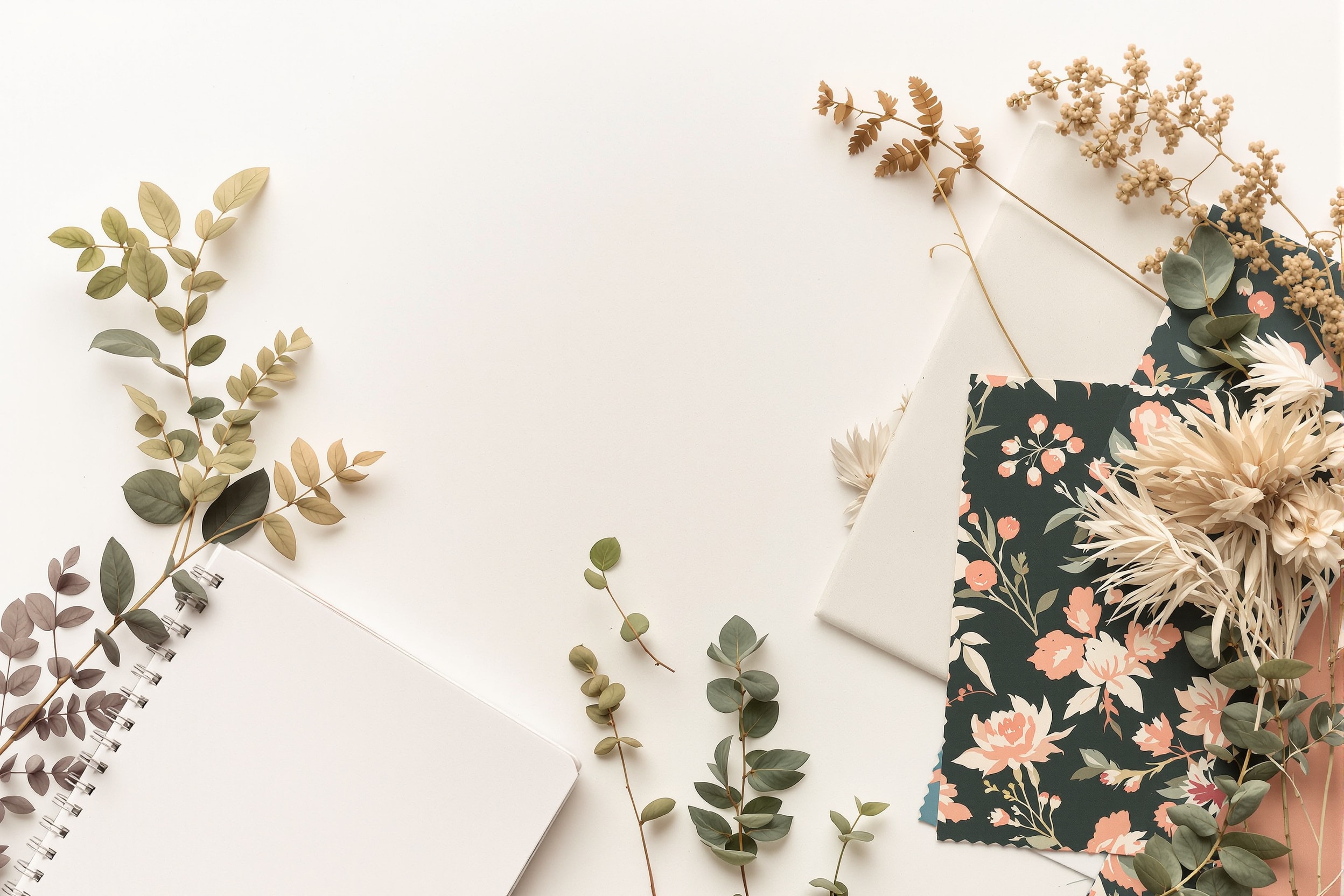
Leaves, petals, water, feathers, stone: the vocabulary of textile design is, overwhelmingly, borrowed from nature. This is no accident. Natural forms carry the repetition, symmetry and gentle irregularity that the eye finds restful, which is exactly what a good repeat pattern needs. This page looks at that tradition and at how designers turn a living thing into a lasting motif.
A very old habit
From the stylised lotus of the ancient world to the flowering vines of medieval weaving and the great botanical prints of the eighteenth and nineteenth centuries, nature has been textile’s constant subject. The reformers of the nineteenth century made the case explicitly — the designer William Morris built an entire aesthetic on close observation of plants, as the collections of the Victoria and Albert Museum vividly show. The impulse to bring the garden indoors, onto cloth, is remarkably consistent across cultures.
Botanical versus organic abstraction
Nature-inspired design tends toward two poles. Botanical motifs are representational — a recognisable rose, fern or branch, often drawn with near-scientific care. Organic abstraction keeps the rhythm of nature but lets go of the literal subject: the swirl of water, the cellular pattern of a leaf, the scatter of light through branches. Much contemporary work — including the photographic method described in from photograph to motif — lives at the abstract end, where a natural texture becomes pure surface.
Translating life into repeat
The challenge is to keep what makes a natural form alive while forcing it into the discipline of a repeat. Too rigid, and a floral looks mechanical; too loose, and the pattern will not tile. Designers manage this with scale (how large the motif sits on the cloth), density (how much ground shows between elements) and directionality (whether the pattern has an up and a down). Getting these right is what makes a nature motif feel effortless.
Colour drawn from the source
Palette is where a nature motif either convinces or fails. The most satisfying schemes are often drawn straight from the source — the greens and rusts of a woodland floor, the blues and greys of water — and then simplified for print. Working in an eco-responsible way adds a further, fitting logic: a motif born from nature, printed with low-impact inks on a natural fibre, closes a pleasing loop between subject and object.
Meaning woven in
Nature motifs have rarely been purely decorative. Across cultures, particular plants and creatures carried meaning — the pomegranate for abundance, the pine for endurance, the lotus for renewal — and a length of patterned cloth could therefore say something as well as adorn. Even where the old symbolism has faded, a nature motif still speaks: it brings a sense of the outdoors, of season and growth, into interior and dress.
For the contemporary designer, this deep well is both a gift and a responsibility. Borrowing a motif tradition means understanding where it comes from and handling it with respect rather than pastiche. Done thoughtfully, a nature-inspired pattern connects a modern scarf or panel to a very long human habit — the wish to keep something of the living world close, rendered in colour and thread.