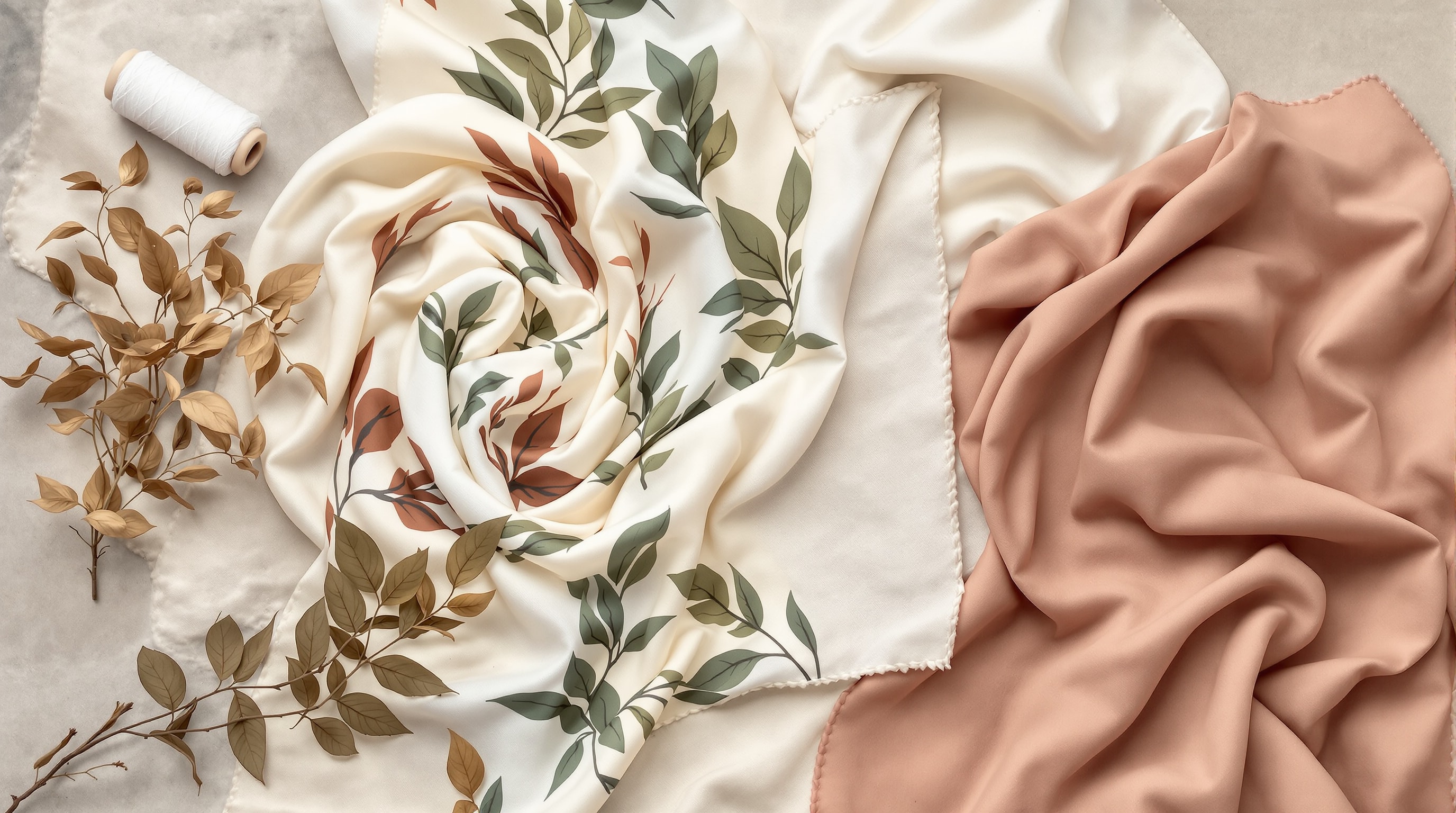
Few objects carry as much quiet craft as a printed silk square. Behind the carré de soie lies a chain of decisions — how a motif is drawn, which fibre receives it, which inks are used, how an edge is finished — that together decide whether a piece feels disposable or enduring. This journal exists to explain those decisions in plain language, and to celebrate the small ateliers and regional traditions that still make textiles the slow way.
We write about the discipline, not a shop. Nothing here is for sale, and the pages carry no maker’s name; the subject is the craft itself — eco-responsible printing on natural fibres, the translation of a photograph into a repeat pattern, and the heritage of “made in France” textile regions that keep this knowledge alive.
Start with the fibre
A textile begins with its material. Natural silk — light, strong, luminous — behaves unlike any synthetic, and understanding it is the first step to reading quality in a scarf or a bolt of cloth. Our guide to natural silk covers satin, twill and the qualities that make the fibre worth caring for, while the art of the silk carré follows a square from blank cloth to rolled hem.
There is another way to read silk before considering colour or motif: as a material whose character begins in the fibre itself. The length of its filaments, the way they are assembled and the weave chosen for the cloth all shape its weight, lustre, drape and response to handling. The natural-silk guide follows those distinctions from origin to momme weight, giving you a firmer basis for comparing an enduring textile with a surface imitation.
Where a motif comes from
A motif is an idea made repeatable. One of the more unusual approaches in contemporary textile design begins with photography — a leaf, a reflection, a texture — reworked into an abstract, symmetrical repeat. We unpack that method in from photograph to motif, and look at the long tradition of nature-inspired pattern that runs from botanical prints to today’s eco-conscious studios.
Made responsibly
“Eco-responsible” is easy to claim and harder to practise. It means natural or certified fibres, water-based and low-toxicity inks, short supply chains and limited runs rather than volume. Our page on eco-responsible textile printing explains what to look for, and the France, terre textile essay traces the regional know-how — Lyon, Alsace, the mills around Mulhouse — that anchors much of this craft.
Beyond the scarf
The same motifs travel onto other objects. A kakemono turns a length of printed textile into wall art; a satin-covered notebook brings pattern to the desk. And for those curious about the bespoke end of the craft, bespoke textile motifs looks at made-to-measure pattern design as a discipline in its own right.
New to all of this? The Journal gathers every essay in one place, from first principles to practical care.
The case for slow textiles
Running through every page here is one conviction: that the alternative to disposable fashion is not doing without, but choosing fewer, better things and keeping them longer. A silk square made from a named fibre, printed with low-impact inks and finished by hand, may cost more than a synthetic scarf — but worn and cared for over decades, it is both the more beautiful and the more economical choice. That is the logic of slow textiles, and it applies equally to a length of cloth, a wall hanging or a cloth-bound book.
You do not need to be a collector to benefit from understanding this. Knowing what a hand-rolled hem is, why momme weight matters, or how a motif is engineered into a repeat simply makes you a better-informed owner — someone who can tell craft from marketing. That is all this journal sets out to offer.