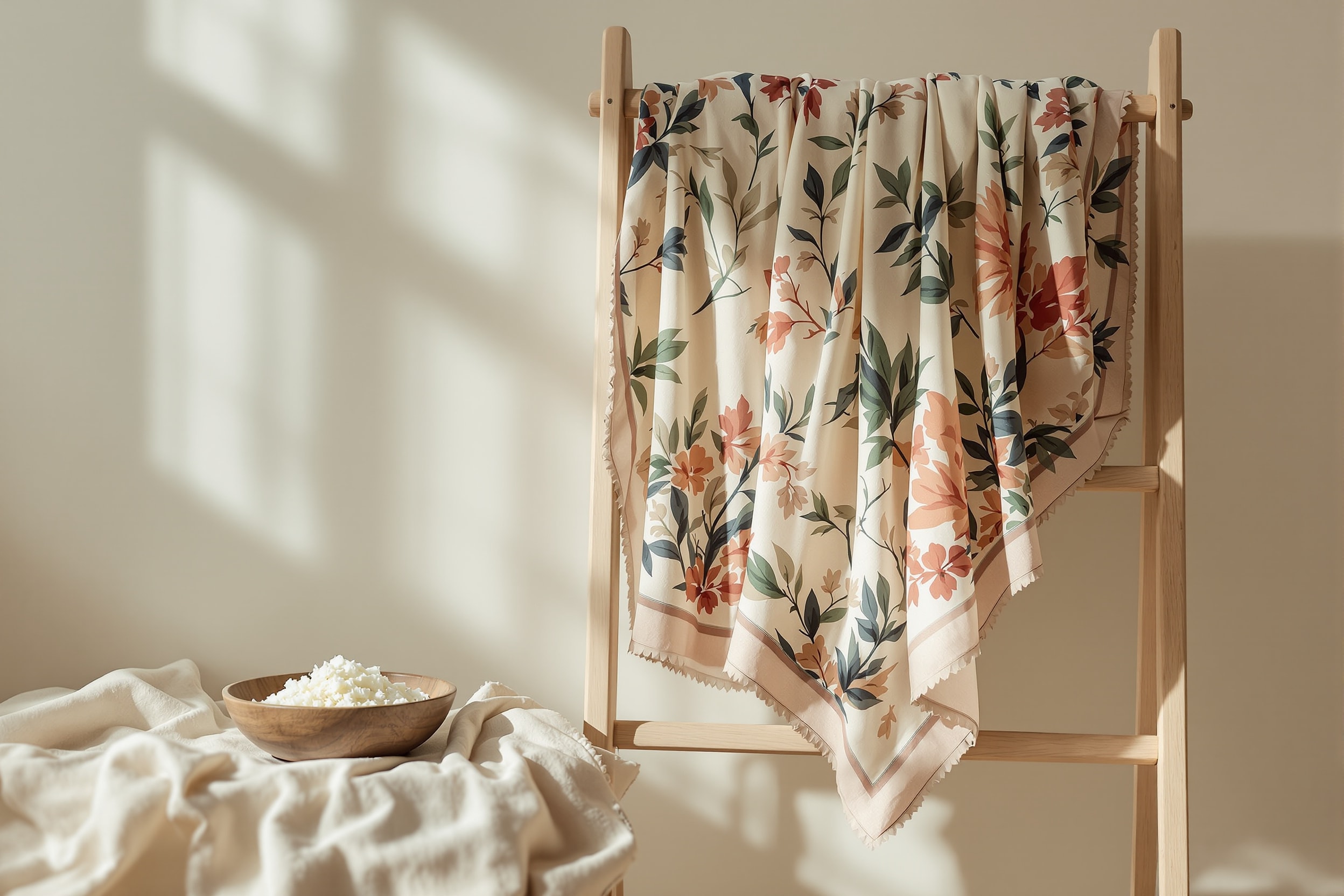
A well-made silk scarf is an heirloom object, and it will behave like one if it is looked after. None of the following is difficult; it simply asks for patience and mild materials rather than the aggressive heat and chemistry that modern laundry takes for granted. Always defer to a maker’s own care label where one exists.
Gentle washing
Most silk can be hand-washed. Use cool or lukewarm water and a small amount of a detergent formulated for delicates or wool; never use bleach or biological detergents, whose enzymes attack protein fibres. Swish the scarf gently rather than rubbing or wringing, and keep the wash brief — silk does not need soaking. Rinse thoroughly in clean cool water until no suds remain. If a piece is heavily structured, hand-painted or precious, a specialist dry-cleaner is the safer route.
Drying and pressing
Never wring silk. Instead, lay the scarf flat on a clean towel, roll the towel to press out most of the water, then unroll and let the scarf dry flat in shade, away from radiators and direct sun, both of which fade colour and weaken fibre. To press, use a cool iron on the reverse while the cloth is still slightly damp, or steam lightly; a pressing cloth protects the printed face.
Stain first aid
Act quickly and gently. Blot — never rub — a fresh spill with a clean, absorbent cloth to lift as much as possible. For water-safe marks, a little cool water and mild soap dabbed from the outside of the stain inward can help; for oil or unknown stains, resist home remedies and take the piece to a professional. The cardinal rule is to avoid heat until a stain is gone, since heat can set it permanently.
Storing and travelling
Store silk clean, dry and loosely folded or rolled, out of direct light. A breathable cotton or acid-free tissue wrapping is ideal; avoid airtight plastic, which can trap moisture and yellow fibres over time. Keep scarves away from rough surfaces, hook-and-loop fastenings and jewellery that can snag threads. For travel, rolling rather than folding reduces hard creases, and a light steam on arrival will refresh the drape. Cared for this way, a scarf will outlast far more expensive things — which is rather the point of buying well-made, slow textiles in the first place.
Common mistakes to avoid
Most silk that comes to grief does so through a handful of avoidable errors. Keeping them in mind is half of good care:
- Heat — hot water, tumble dryers and hot irons weaken and yellow silk; keep everything cool.
- Wringing — twisting to remove water breaks fibres and sets creases; roll in a towel instead.
- Bleach and biological detergents — their oxidising agents and enzymes attack protein fibre; use only mild, silk-safe products.
- Direct sun — prolonged light fades printed colour permanently; dry and store in shade.
- Airtight plastic storage — it traps moisture; use breathable cotton or acid-free tissue.
None of this is onerous. Silk simply asks to be treated as the natural, living material it is — gently, and with a little patience — and in return it stays beautiful for a very long time.